Understanding the Business Process Strategy Vector Concept
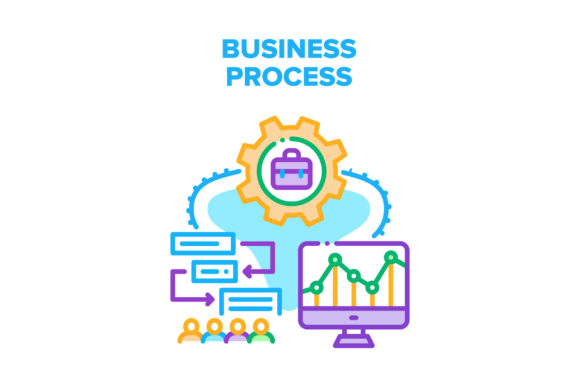
The Business Process Strategy Vector Concept is a visual and analytical tool designed to help organizations map, analyze, and optimize their business processes. This concept is particularly useful for managers and decision-makers who need to streamline operations, improve efficiency, and achieve strategic goals. By using vector graphics, this approach provides a clear, scalable, and detailed representation of business processes, making it easier to identify areas for improvement.
Real-World Applications in Various Industries
The Business Process Strategy Vector Concept can be applied across multiple industries, each with its unique set of challenges and opportunities. Here are some practical examples:
- Healthcare: In hospitals, this concept can be used to map patient flow, from admission to discharge, identifying bottlenecks and inefficiencies. For instance, by analyzing the process of patient registration, treatment, and follow-up, hospitals can reduce wait times and improve patient satisfaction.
- Manufacturing: In manufacturing, the concept helps in mapping production lines, supply chain logistics, and quality control processes. For example, a car manufacturer can use this tool to optimize the assembly line, ensuring that all components are available when needed, thereby reducing downtime and increasing productivity.
- Finance: Financial institutions can benefit from this concept by mapping and optimizing processes such as loan approvals, account management, and customer service. For instance, a bank can use this tool to streamline the mortgage application process, reducing the time and paperwork required, and improving the customer experience.
Benefits for Different Users
Different users within an organization can leverage the Business Process Strategy Vector Concept in various ways:
- Project Managers: They can use this tool to plan and execute projects more efficiently. By visualizing the entire project lifecycle, project managers can identify critical paths, allocate resources effectively, and monitor progress in real-time.
- Operations Managers: Operations managers can use this concept to optimize day-to-day operations. For example, by mapping the supply chain, they can identify areas where inventory management can be improved, reducing costs and enhancing efficiency.
- IT Professionals: IT teams can use this tool to design and implement new systems or integrate existing ones. By visualizing the data flow and system interactions, they can ensure that the new system meets the organization's needs and integrates seamlessly with existing infrastructure.
Practical Examples and Observations
Consider a retail company looking to enhance its online shopping experience. By using the Business Process Strategy Vector Concept, the company can map the entire customer journey, from browsing products to checkout and delivery. This visualization can help the company identify areas where the user experience can be improved, such as simplifying the checkout process or providing more transparent shipping information.
In another scenario, a software development firm can use this concept to map the development lifecycle, from requirements gathering to deployment. This can help the team identify bottlenecks in the development process, such as delays in testing or code review, and implement changes to speed up the release cycle.
Common Considerations Before Implementation
Before adopting the Business Process Strategy Vector Concept, there are several key considerations to keep in mind:
- Define Clear Objectives: Clearly define what you want to achieve with the tool. Whether it's improving efficiency, reducing costs, or enhancing customer satisfaction, having clear objectives will guide the implementation process.
- Involve Stakeholders: Engage all relevant stakeholders, including managers, employees, and external partners. Their input and buy-in are crucial for the success of the implementation.
- Choose the Right Tools: Select the appropriate software and tools that support vector graphics and provide the necessary features for process mapping and analysis. Popular options include Visio, Lucidchart, and Draw.io.
- Training and Support: Provide adequate training and support to users. This includes not only technical training on how to use the software but also guidance on how to effectively map and analyze processes.
Strengths and Limitations
The Business Process Strategy Vector Concept offers several strengths, including:
- Clarity and Detail: The use of vector graphics allows for a high level of detail and clarity, making it easier to understand complex processes.
- Scalability: Vector graphics can be scaled without losing quality, making it ideal for large and intricate process maps.
- Collaboration: These tools often support collaboration, allowing multiple users to work on the same process map simultaneously.
However, there are also some limitations to consider:
- Initial Learning Curve: Users may need time to become proficient with the software and the concept itself.
- Over-Complexity: If not managed properly, process maps can become overly complex and difficult to interpret, especially for those unfamiliar with the process.
- Dependency on Software: The effectiveness of the concept relies heavily on the chosen software, and any issues with the software can impact the overall process.
By understanding these strengths and limitations, organizations can better leverage the Business Process Strategy Vector Concept to drive meaningful improvements in their operations and achieve their strategic goals.